
Holidays and healthcare: Healthwatch's top tips
Before you go on holiday, and as early as possible, you should be thinking about health insurance, vaccinations and medication.
Health insurance
Health/travel insurance is arguably the most important thing you should put in place before you travel abroad because it is such a comprehensive tool when things go wrong. Health insurance covers you for a multitude of travel related health costs such as, emergency treatments, routine treatment for chronic illnesses, routine maternity care, prescribed medication and medical repatriation. Travel insurance covers you from the financial side of experiencing health issues abroad and is very important as unlike in the UK, where we enjoy free healthcare, abroad you would have to pay for any treatment you received. You can buy travel insurance online for as cheap as £3!
Also an important part of being insured abroad is the Global Health Insurance Card (GHIC). This card provides UK residents with another layer of protection abroad, ensuring you receive healthcare on the same basis or rate as a local resident of that country would. The card is free to apply for through the NHS website. Although this card provides you with some protection from the cost of healthcare abroad, it is not a replacement for travel insurance. People who are best covered have both of the above provisions.
Vaccinations
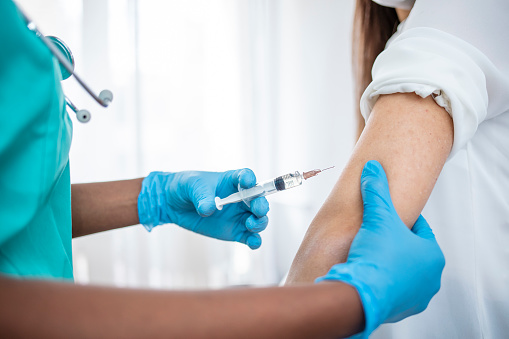
Having the appropriate vaccinations for your travel destination ensures two things:
- You will stay safe abroad
- You will be allowed to travel
It is important to note that without the relevant vaccinations, some countries will not let you enter their country. Sometimes you are even required to provide proof of vaccination, so this is important to keep with you.
Vaccinations for the following diseases are free on the NHS; polio, typhoid, cholera and hepatitis A, any other vaccination will need to be paid for. You can find information about which vaccinations you will need for your trip and whether you need proof of them on websites such as NHS England https://www.nhs.uk/vaccinations/travel-vaccinations/travel-vaccination-advice/ and Travel Health Pro https://travelhealthpro.org.uk/countries.
Relevant medication
If you take regular medication and need to take it abroad, this will need to be carried in your hand luggage along with some proof that it was prescribed to you, e.g., your prescription. Without this proof, the medication may be confiscated at security or customs.
Good things to keep in mind
Local hospital information- it is always helpful to be aware of the location of the nearest hospital in case of an emergency, you can ask your hotel's reception team to provide this information.
Local pharmacy info- in the instance of common holiday ailments like ear infections, food poisoning or sunburn you can see a pharmacist much the same as you can in the UK to pick up any medication you need. There should be a pharmacy in the town you are staying in.
If you're travelling alone- It is good practice to make a document you can carry around with that contains your health information and emergency contact details so that you can receive appropriate medical care as soon as possible, should you need it.
For further support and information, take a look at the following links: